

Serpent Team

Tekunda Team
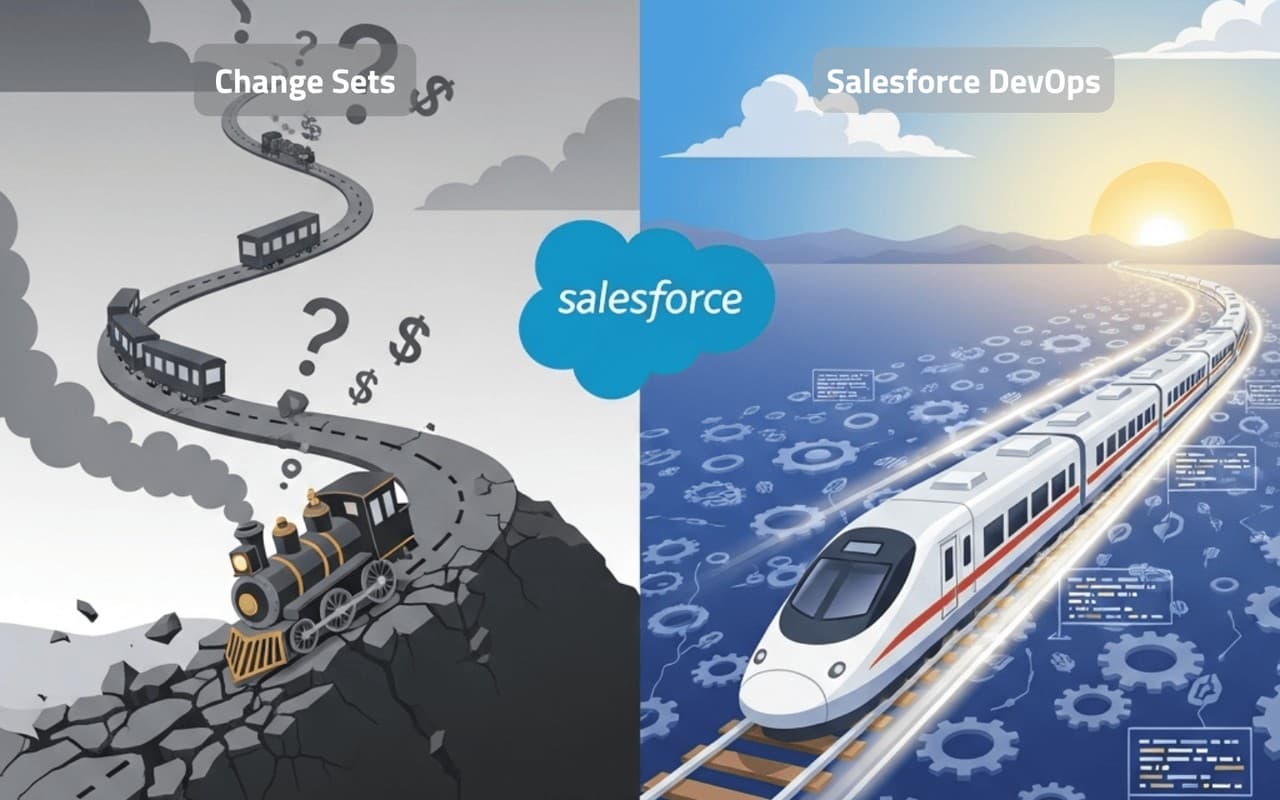
Let’s talk about the elephant in the room.
If you’re still using
change sets, you already know the story - the deployment that crawls along, makes you sweat, and
then… fails. This isn’t just an “IT problem.” It’s a
business problem wearing a technical disguise.
Slow deployments push back release schedules, frustrate your team, and sour the end-user experience. Failed deployments waste time, burn through budgets, and chip away at trust - sometimes even stalling business-critical processes.
And the worst part? With change sets, there’s no native rollback. If something goes wrong, you’ll spend more time fixing the mess than it took to make it - doubling the downtime and the disruption.
Still, plenty of organizations shrug this off as “just the way things are.” They’re not. And the cost of doing nothing is higher than you think.
Delays aren’t just annoying - they’re expensive. The Gearset State of Salesforce DevOps Report (2025) shows the hit in the UK:
3.8 months - average delay
£107,000 per team per year lost in wasted time, missed opportunities, and rework
82% of organizations face deployment delays
Deployments are 26% more likely to be late than early
87% of IT leaders say skills shortages make it worse
And it’s not just the UK. Across Europe, the US, and beyond, it’s the same story - complex changes, no automation, disconnected teams… and change sets sitting right in the middle of the chaos.
Every day between “ready to release” and “in production” is a day your users aren’t seeing value. Those days add up - fast.
The impact? Slipped go-live dates for revenue-driving features. Budgets that bloat from rework. Teams that lose motivation. Stakeholders who start wondering if your delivery dates are just optimistic guesses.
When your pipeline is unpredictable, your business growth is unpredictable too.
The good news - this is fixable. Deployment speed and success rates can improve with the right approach.
💡 Best practices:
Deploy in small, tested batches so issues are easier to find and fix
Automate repetitive tasks to cut down on human error
Validate changes in sandboxes before they go live
Schedule deployments during off-peak hours to limit user impact
Keep a rollback plan ready so recovery is quick when things go wrong
Smooth deployments don’t just make IT happy - they protect your revenue, your team, and your reputation.
With modern DevOps - automated testing, packaged deployments, instant rollbacks - those long, high-risk releases can be a thing of the past.
If you’re still battling change sets in 2025, ask yourself: What’s the cost of staying the same?
Can you roll back a Salesforce change set?
No. Change sets have no native rollback, so recovering from a bad release means undoing the work by hand. That often takes longer than the deployment itself and doubles the disruption.
How much do slow Salesforce deployments cost a business?
The Gearset State of Salesforce DevOps Report (2025) puts the average UK delay at 3.8 months and around £107,000 per team per year in wasted time, missed opportunities and rework. It also found 82% of organisations face deployment delays.
Why do deployments fail so often?
Usually because of complex manual changes, no automation and teams working in isolation from each other. Change sets sit in the middle of that: manual selection, no automated tests and no way back.
How can we reduce deployment risk?
Deploy in small tested batches, automate repetitive steps, validate in a sandbox first and schedule releases off-peak. Keep a rollback plan ready so recovery is quick when something does break.
Serpent helps Salesforce teams replace risky change sets with fast, automated deployments - giving you rollback, CI/CD pipelines, and release speed without the chaos..
Every delayed deployment is lost revenue and wasted potential.
Commitment free!