

VS Code
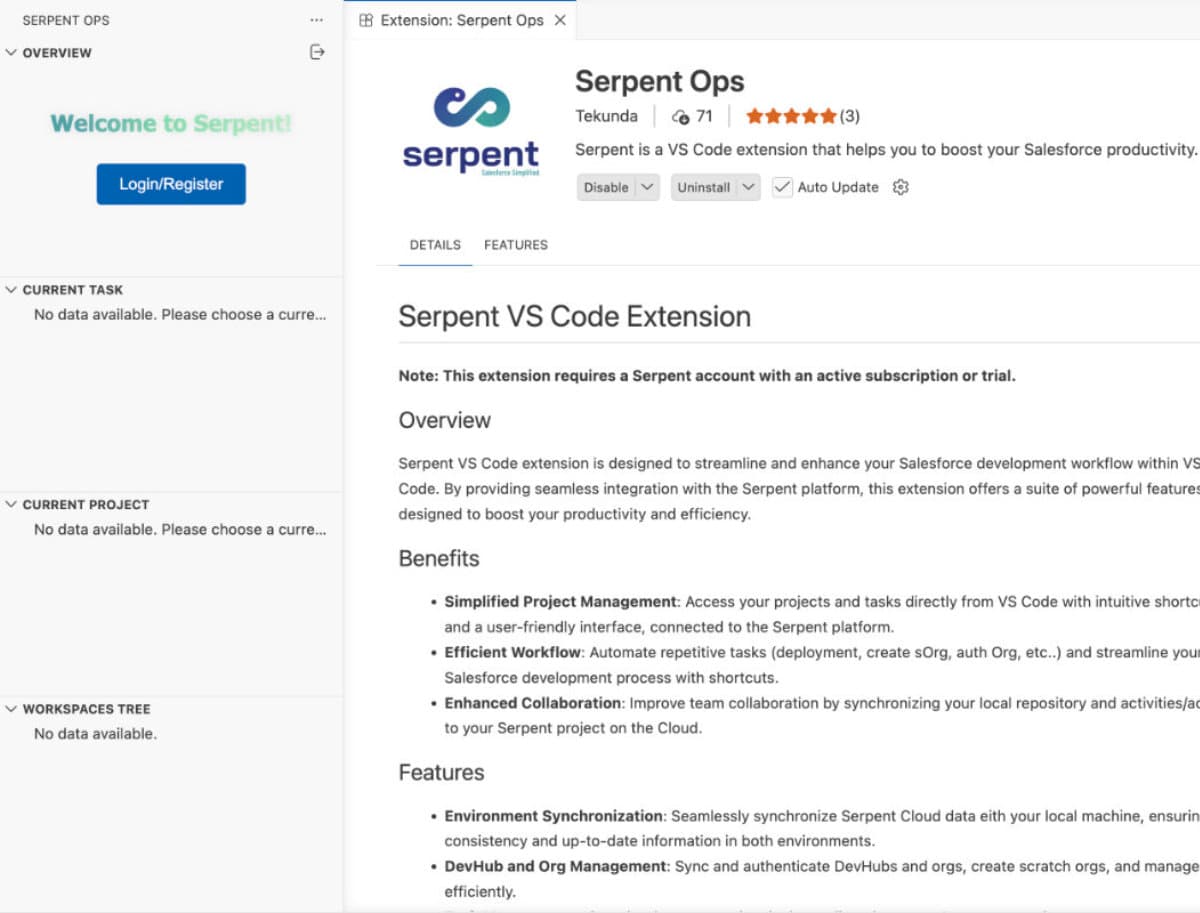
VS Code Extension
The Serpent VS Code Extension lets developers work as they normally do - writing Apex, LWC, or configs locally,
while Serpent tracks changes, links them to tasks, and handles GitFlow behind the scenes.
while Serpent tracks changes, links them to tasks, and handles GitFlow behind the scenes.
 Start free
AccountTrigger.cls
UAT SandboxAccountTrigger.clsSerpent ✓
1trigger AccountTrigger on Account (before insert, before update) {
2 // Fixed: use selector pattern to avoid SOQL in loop
3 List<Account> accts = AccountSelector.getAll();
4 for (Account a : Trigger.new) {
5 AccountHandler.process(a, accts);
6 }
7}
Serpent
🚀
Deploy to UAT
1 file changed
Changes
− SOQL in loop
+ AccountSelector.getAll()
for (Account a : Trigger.new)
🔍
AI review
✓ Cleared · 94% coverage
Ready to deploy
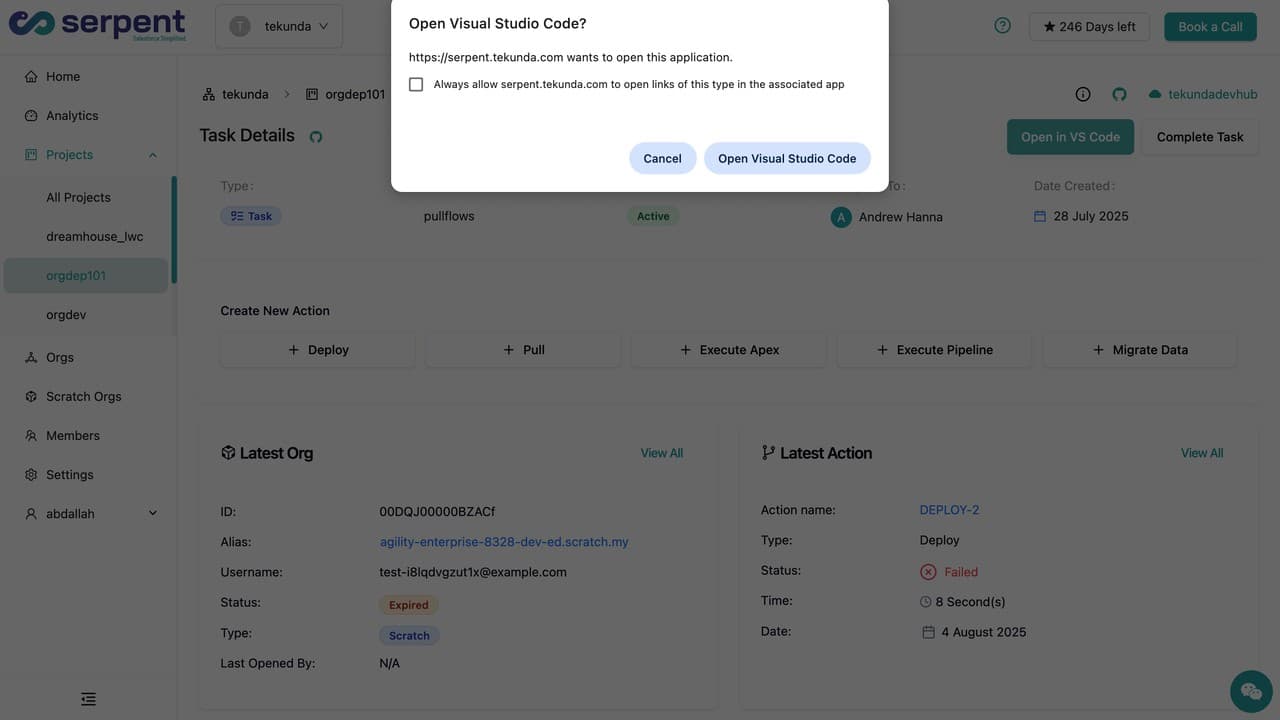
Deploy and manage changes without leaving your IDE
The best DevOps is the kind you don't notice
Write your code - Serpent tracks what's changed, links it to the right task, and handles the Git flow in the background. No CLI commands, no branch management.
Vibe code with any AI assistant via MCP
Serpent's native MCP server lets any agentic IDE - Cursor, Claude Code, Windsurf - pull changes, check org status, and interact with your workflow directly, with the same guardrails and audit trail as every other change.

For ISVs: your IDE, your package workflow, fully connected
Package source, scratch org connections, dependency tracking, and version management are all accessible from inside VS Code - no bouncing between tools to manage a single development cycle.
Trusted by the Salesforce community
Backed by Salesforce partners.
Salesforce MVPs, Trainers, ISV partners, community leaders, and consultancies who deliver on Salesforce alongside Serpent every day.
Official Serpent partner · CertifyCRM
"Serpent helps your team deploy faster without becoming DevOps specialists. Salesforce DevOps shouldn't feel like launching a rocket, and with Serpent, it doesn't."
5-step deployment walkthrough, step by step
Git handled behind the scenes, no CLI needed
Full audit trail, rollback, and AI-assisted retrieval

Daryl Moon
Salesforce Trainer & Consultant, CertifyCRM
Official Serpent partner · ISV Forum
André van Kampen a seasoned Salesforce MVP, and founder of the ISV Forum, one of the most closely watched communities for AppExchange publishers who would like to share their (success) story, lessons learnt, or discuss challenges in a roundtable setting.
Highlighted flat-team pricing vs per-seat alternatives
Noted 1GP & 2GP package workflow support
Recommended for ISV teams managing multiple subscriber orgs

André van Kampen
Salesforce MVP, Founder of ISV Forum
Official Serpent partner · Code Zenith
Code Zenith officially partnered with Serpent to redefine how their consulting clients handle Salesforce deployments. APAC-based Salesforce consultancy focused on enterprise architecture and seamless DevOps experiences.
Faster, automated release cycles
Enhanced environment synchronization across orgs
Robust version control, reduced deployment risk

Abhijeet Anand
Founder, Code Zenith