
Try Serpent Free

How to fix STORAGE_LIMIT_EXCEEDED in Salesforce deployments

The target org has hit its data or file storage limit, so the deployment cannot insert the records it needs.

Surfaces during: runtime DML, most often Apex test setup in a small sandbox

What it means

STORAGE_LIMIT_EXCEEDED means the target org, usually a Developer or sandbox org with a small storage allocation, is full. Most deployments that hit this are blocked by Apex test setup data trying to insert records into an org that has no room left, not by the deployment's own metadata.

Salesforce tracks data storage and file storage as separate allocations, so a full org can be hit by either a large number of records or a smaller number of records with large attached files; the error text doesn't always make clear which one is exhausted.

Diagnosis

Common causes

Sandbox storage allocation is small and nearly full
Developer and some sandbox org types ship with limited storage, and accumulated data over time leaves little headroom for test runs.
Large files or attachments from repeated test runs
Files or attachments created by CI runs or manual testing accumulate and are never cleaned up.
Debug logs and unused data left unpurged
Old debug logs, reports, or big object records consume storage without anyone noticing until a deploy fails.

The fix

  1. Purge unused data and files
    Delete old attachments, files, and debug logs from the target org to free up storage.
  2. Use scratch orgs for CI validation
    Run test deployments against fresh scratch orgs instead of a shared sandbox that accumulates storage over time.
  3. Request a storage limit increase
    If the org is at its plan limit and cleanup is not enough, contact Salesforce to raise the allocation.
In practice

How Serpent prevents this

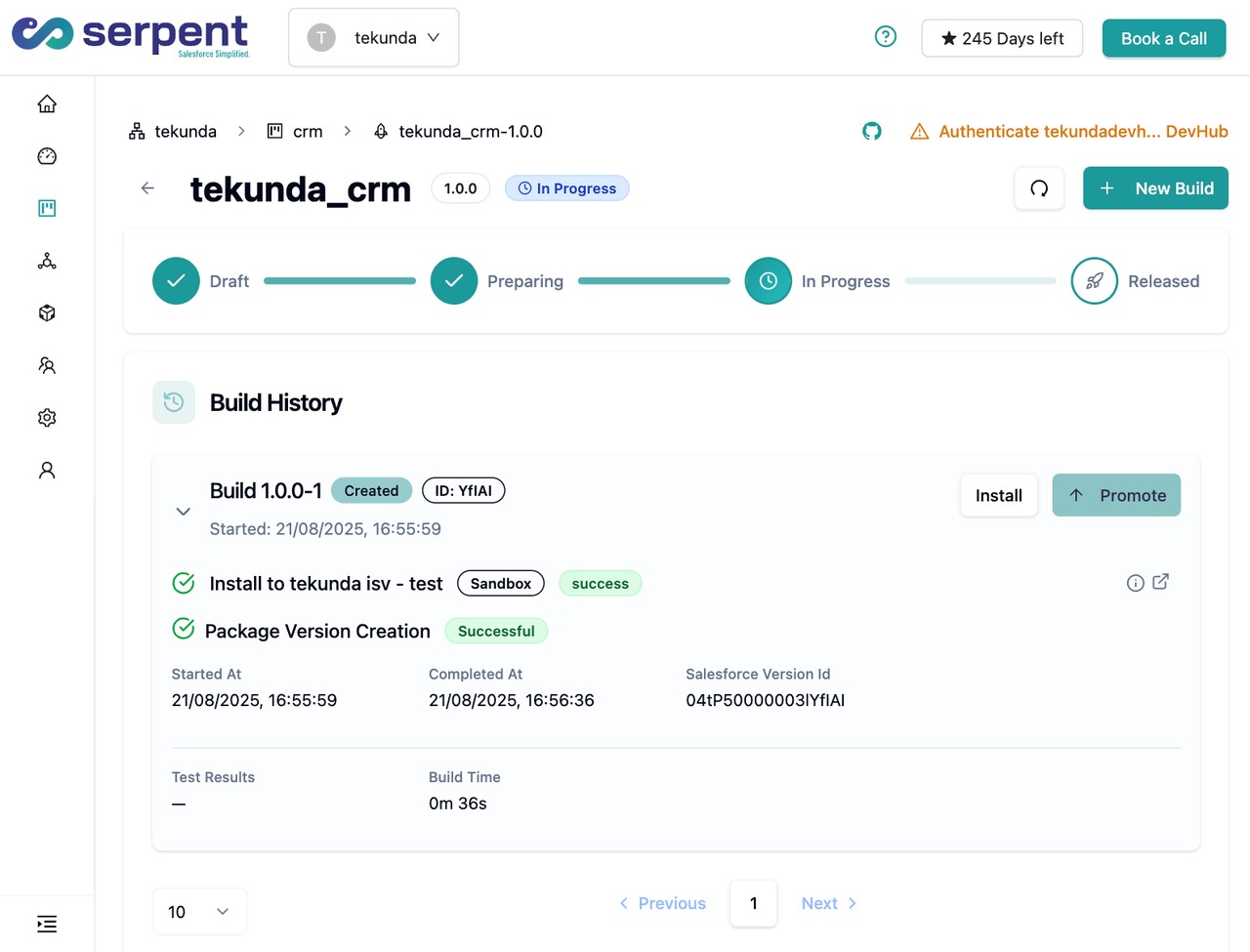
Serpent AI runs CI validation against scratch orgs by default, so storage never creeps up the way it does in a long-lived shared sandbox. See the Salesforce deployment error library.
Release dashboard with conflict alerts in Serpent

Prevention

Clean up test-generated files automatically after every CI run
Delete ContentVersion and Attachment records created by an automated test run as a final step in the pipeline, not manually after storage becomes a problem.
Default to scratch orgs for anything transient
Reserve persistent sandboxes for work that genuinely needs to persist, and use disposable scratch orgs for CI validation, so storage never has time to accumulate.
Monitor storage usage on long-lived sandboxes proactively
Check data and file storage percentages under Setup, Storage Usage, on a schedule for shared sandboxes, before a deployment discovers the ceiling for you.
Common questions

STORAGE_LIMIT_EXCEEDED, answered

Will this error happen in production too?
It is rare, since production orgs typically have far more storage, but it can happen on smaller editions with heavy attachment or big object usage.
Does emptying the Recycle Bin free up storage immediately?
Yes, permanently deleting records from the Recycle Bin reclaims data storage right away, and it's often the fastest way to recover room in a nearly-full sandbox.
Do sandbox refreshes reset storage usage back to production's current level?
Yes. A sandbox refresh replaces the sandbox's data with a fresh copy from its source, resetting accumulated test data and storage usage back to whatever the source org holds at refresh time.

Start free. No credit card, no install, no commitment.

Set up in under 15 minutes. No DevOps hire needed.

Curious about faster shipping before you dive in? Let's talk

Commitment free!