

Salesforce DevOps for Data Cloud
Most Data Cloud configuration lives outside the Metadata API. Here's what that means for your release process.
What's hard to deploy
Data Streams, Data Model Objects, Calculated Insights, and Segments mostly live in Data Cloud's own configuration layer rather than the standard Metadata API, so a change set or 2GP package rarely moves them cleanly between orgs. Sandbox refreshes don't carry Data Cloud's ingested data with them either, which means teams often rebuild or reconnect data streams by hand in every new sandbox instead of promoting a tracked change. The same gap reaches Agentforce, whose grounding and retrieval config is tied to Data Cloud. Segments activated into Marketing Cloud land on a separate platform the Salesforce Metadata API doesn't cover at all.
Where it gets hard
How Serpent helps
Serpent centralizes every sandbox and scratch org your Data Cloud setup depends on, syncing environments from one place so the Salesforce-side metadata around it, permission sets, flows, integration users, stays version-tracked even though Data Cloud's own configuration lives outside the Metadata API. See org management in Serpent for how environments stay in sync. For teams evaluating a dedicated data-movement tool, see how Serpent compares to Prodly.
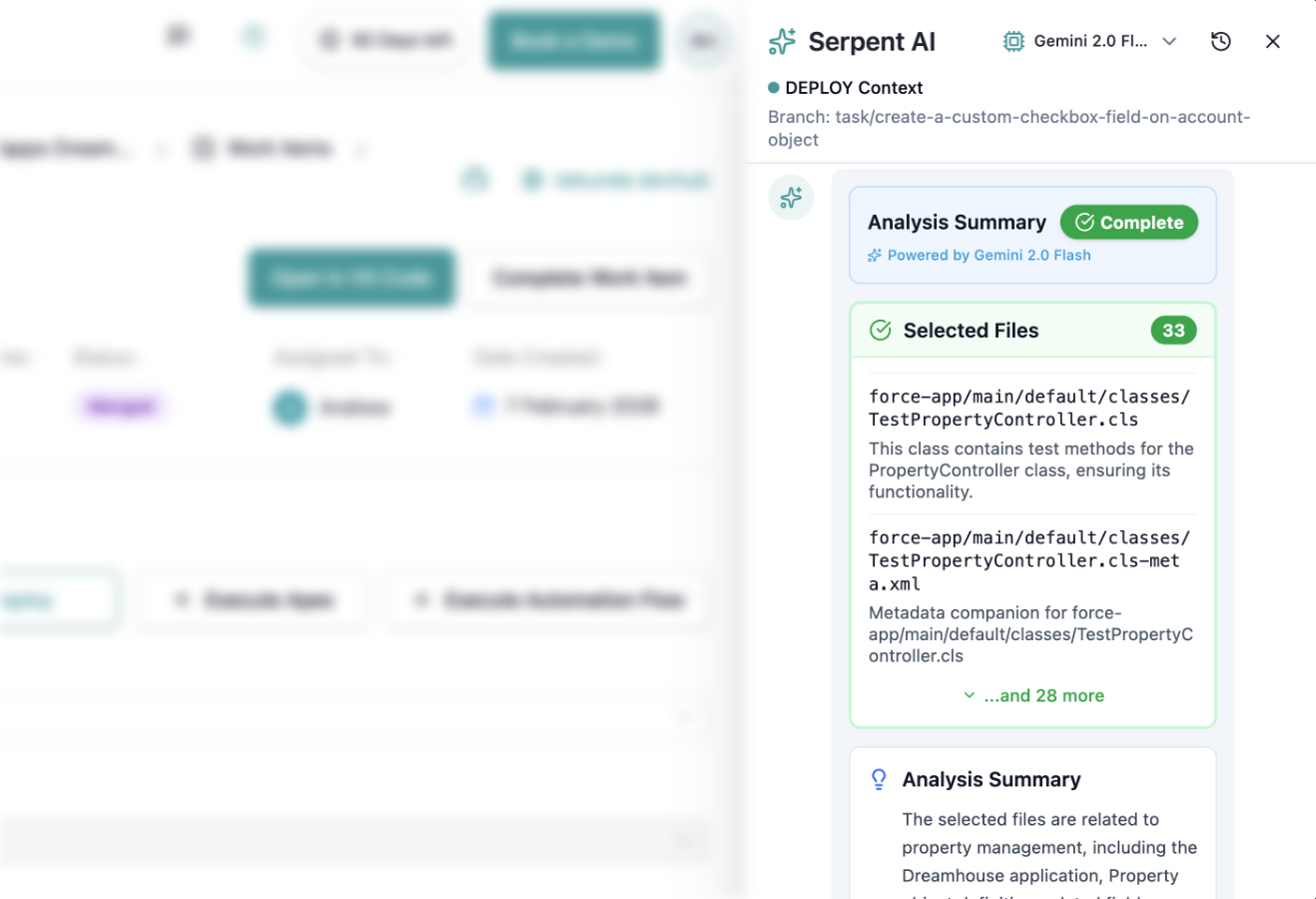
Typical release for Data Cloud
- Task the Salesforce-side changePermission sets, flows, and the integration user config a Data Cloud stream depends on go into one task.
- Delta deploy the supporting metadataSerpent ships just what changed, not a full org deploy, so the Data Cloud objects you can't move stay isolated from what you can.
- Sync environments before reconnecting streamsPooled sandboxes and scratch orgs stay aligned from one dashboard, so reconnecting a data stream in a new environment starts from a known-good baseline.
- Roll back the metadata, not the pipelineIf something breaks, a one-click rollback reverts the Salesforce-side change without touching Data Cloud's own configuration.
Data Cloud DevOps, answered
Start free. No credit card, no install, no commitment.
Set up in under 15 minutes. No DevOps hire needed.