


Tekunda Team

Serpent Team
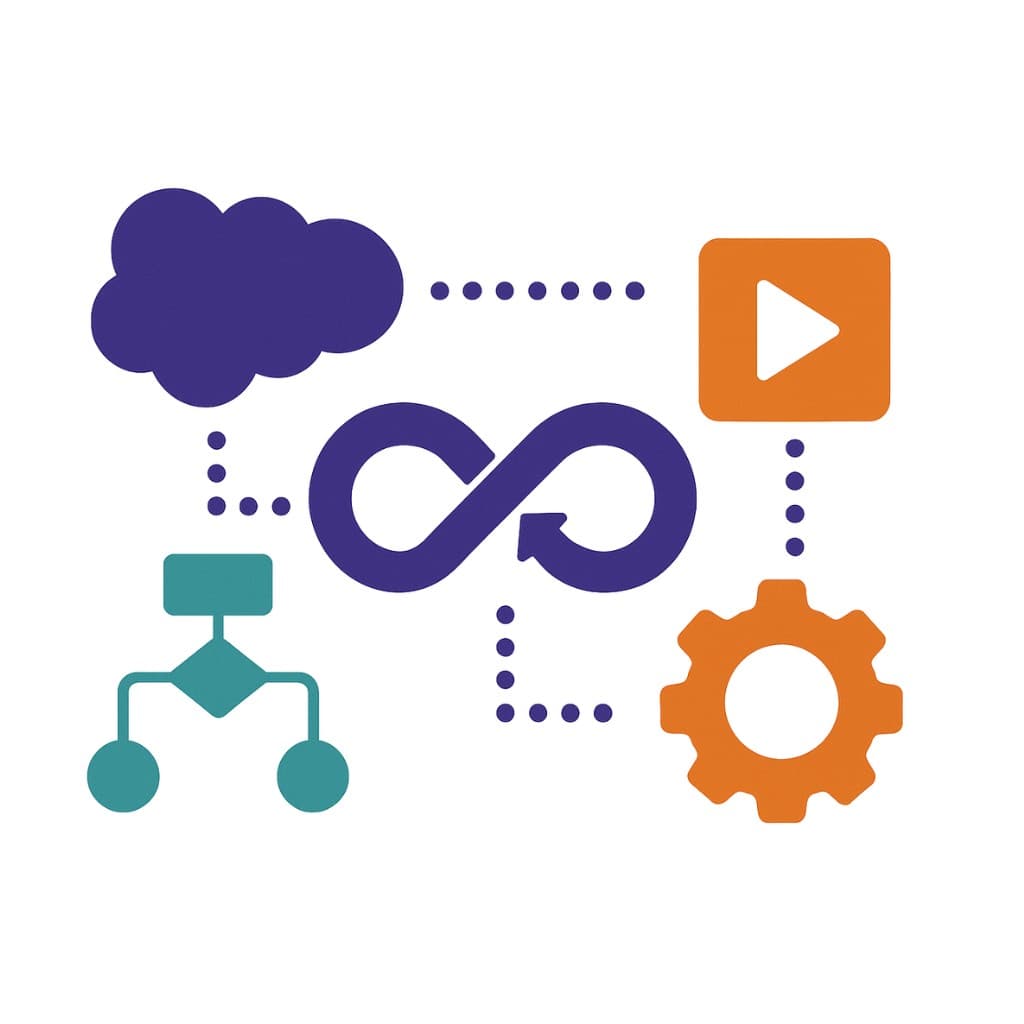
Change sets were never meant for scale.
They served as a manual bridge for small orgs until teams grew, features multiplied, and parallel workstreams made “click-to-deploy” impossible to manage.
Today, even DevOps platforms that replaced change sets often fall into the same trap: too many steps, too much configuration, and too little context.
Instead of enabling speed, they create overhead - forcing teams to juggle scripts, pipelines, and permissions for every release.
It’s time to move past both extremes. The modern Salesforce DevOps playbook is simpler: continuous delivery without complexity.
For a wider comparison of tools worth considering, see our guide to the best Salesforce DevOps platforms and tools for 2026.
| Stage | Era | Approach | Limitations |
|---|---|---|---|
| 1️⃣ Change Sets | Pre-DevOps | Manual selection and deployment | Prone to errors, no version control |
| 2️⃣ Scripted CI/CD | Early DevOps | Pipelines, Git, and CLI tools | Requires dedicated engineer |
| 3️⃣ Task-Based Automation | Modern | Unified, visual workflow | Built for real-world Salesforce teams |
Most teams are stuck between Stage 1 and 2, either spending hours on manual work or
maintaining complex CI/CD scripts that few people truly understand.
Stage 3 solves both.
Here’s what the new model looks like, step-by-step.
Every change begins as a task tied to a story.
By connecting work items directly to metadata, you align development and release
cycles automatically.
Serpent does this
natively - no manual mapping, no spreadsheets.
Integrate your sandboxes, production org, and Git once.
Serpent manages GitFlow behind the scenes, linking each task to its own branch and
keeping orgs in sync.
Every task runs pre-deployment checks before promotion.
If something breaks, you know exactly which component caused it - and rollback is
instant.
Instead of packaging components manually, deploy per task.
This approach brings context: you’re promoting specific work, not guessing
which XML files matter.
Drift happens when orgs evolve separately.
Serpent automatically compares and alerts you when configurations diverge,
preventing failed releases before they happen.
Visibility turns DevOps from art into science.
Track how long tasks take from commit to deployment, and measure improvement over
time.
Traditional DevOps focuses on automation
steps; modern DevOps focuses on
alignment.
By treating tasks, orgs, and branches as one connected system, you gain:
Teams that follow this playbook cut release time by up to 6×, without adding headcount or infrastructure.
A 4-developer ISV team replaced manual change sets with Serpent’s task-based
workflow.
They moved from weekly releases to
twice-daily deployments and eliminated 90 % of post-release fixes.
Read a detailed case study.
A boutique partner automated testing and drift detection through Serpent’s Org
Management feature.
QA cycles dropped from two
days to two hours.
These results aren’t outliers,they’re what happens when DevOps aligns with how Salesforce teams actually work.
Why do change sets stop working as a team grows?
Change sets were a manual bridge for small orgs. Once features multiply and several workstreams run in parallel, selecting components by hand is slow, error prone, and leaves no version history to fall back on.
What are the stages of Salesforce release management?
Change sets, where deployment is manual selection. Scripted CI/CD, which adds pipelines, Git and CLI tools but usually needs a dedicated engineer. Task-based automation, which puts the same work into one unified workflow.
What does deploying by task mean?
It means promoting a specific work item and the components attached to it, rather than hand-picking XML files into a package. Each deployment carries the context of what was built and why, which makes review and rollback far easier.
What is configuration drift between Salesforce orgs?
Drift is what happens when environments evolve separately and their configurations stop matching. Comparing orgs and alerting on divergence catches the mismatch before it turns into a failed release.
Change sets built habits. Legacy tools built walls. The future builds momentum, a connected workflow that anyone can run and everyone can trust.
Serpent delivers that unified path: task-based, visual, and intelligent.
One
tool for planning, deploying, and analyzing Salesforce releases without the friction
of traditional DevOps.
Commitment free!